
Patagonia Trip Packing List: What to Pack for a Patagonia Trip?
The things to pack for a Patagonia trip are layered clothing, waterproof gear, sturdy hiking boots, trekking poles, and vital navigation tools. Patagonia sits at the southern tip of South America, where weather shifts from warm sunshine to freezing rain within a single afternoon. Trekkers crossing Torres del Paine or Los Glaciares National Park face relentless Patagonian winds, muddy trails, and sudden cold fronts that demand serious preparation. The items packed must serve a clear purpose, whether for comfort, safety, or trail performance.
Layering forms the foundation of any solid packing strategy (a moisture-wicking base layer, an insulating mid-layer (fleece or down jacket), and a windproof, waterproof outer shell) that covers the full range of trail conditions. Waterproof hiking boots with ankle support protect feet on wet, rocky, and uneven terrain. A 40L to 60L backpack fitted with a rain cover keeps the entire gear dry during sudden downpours. Trekking poles reduce knee strain on steep descents and improve balance on river crossings. A headlamp, a first-aid kit, and a portable water filter address critical safety needs on remote, multi-day routes. Sun protection items, including sunglasses, SPF 50 sunscreen, and a wide-brim hat, protect against intense UV exposure at high elevations. Efficient packing without excess weight defines the difference from a grueling trek to a rewarding Patagonia trip.
Layering forms the foundation of any solid packing strategy (a moisture-wicking base layer, an insulating mid-layer (fleece or down jacket), and a windproof, waterproof outer shell) that covers the full range of trail conditions. Waterproof hiking boots with ankle support protect feet on wet, rocky, and uneven terrain. A 40L to 60L backpack fitted with a rain cover keeps the entire gear dry during sudden downpours. Trekking poles reduce knee strain on steep descents and improve balance on river crossings. A headlamp, a first-aid kit, and a portable water filter address critical safety needs on remote, multi-day routes. Sun protection items, including sunglasses, SPF 50 sunscreen, and a wide-brim hat, protect against intense UV exposure at high elevations. Efficient packing without excess weight defines the difference from a grueling trek to a rewarding Patagonia trip.
Packing Progress
0 / 49 items
Documents
Passport
Documents
Permit/booking confirmation
Documents
Travel insurance details
Documents
Cash
Documents
Card
Essentials
Headlamp
Essentials
Water bottles
Essentials
Hydration bladder
Essentials
Water treatment
Essentials
Sunscreen
Essentials
Lip balm
Essentials
Insect repellent
Essentials
Personal medications
Essentials
First-aid kit
Clothing
Moisture-wicking shirts
Clothing
Thermal base layers
Clothing
Insulating jacket
Clothing
Rain jacket
Clothing
Rain pants
Clothing
Hiking pants
Clothing
Hiking shorts
Clothing
Underwear
Clothing
Hiking socks
Clothing
Beanie/warm hat
Clothing
Sun hat/cap
Clothing
Gloves
Clothing
Buff/neck gaiter
Footwear
Hiking boots
Footwear
Camp shoes/sandals
Gear
Daypack
Gear
Rain cover
Gear
Trekking poles
Gear
Dry bags/ziplock bags
Gear
Sunglasses
Gear
Quick-dry towel
Sleeping
Sleeping bag
Sleeping
Sleeping bag liner
Sleeping
Pillow
Hygiene
Toiletries
Hygiene
Toilet paper/tissues
Hygiene
Hand sanitizer
Hygiene
Wet wipes
Hygiene
Menstrual products
Food
Snacks
Food
Electrolytes
Electronics
Phone/camera
Electronics
Charger
Electronics
Power bank
Electronics
Earplugs
Provides destination focused guidance centered on practical planning,
cultural context, and independent exploration across global regions.

Delivers place based narratives shaped by geography, science,
wildlife,
history, and documentary level storytelling.

Presents curated destination insight emphasizing trip structure,
accommodations, dining standards, and traveler comfort.

Showcases luxury oriented travel content focused on resorts,
airlines,
cruises, experiences, and lifestyle driven journeys.

Publishes travel related coverage driven by trends, deals, headlines,
and
broad audience appeal.

Patagonia Trip Tours Review
These Patagonia Trip Tours Review share firsthand experiences from travelers who completed the legendary hike to Patagonia, highlighting trail conditions, cultural insights, scenery, organization, and the unforgettable arrival at the Lost City of the Incas.

4.9
Average Rating
Out of 5 stars
Average customer rating across all tours.
12,847
Happy Travelers
Since 2015
Trekkers who completed tours with us.
2,156
Tours Completed
A year alone
Successfully completed Hikking tours.
98
Recommend Rate
Would book again or refer others
Guests who recommend us to others.
What are the Patagonia Trip Packing Rules and Restrictions?
The Patagonia trip packing rules and restrictions are listed below.
- Weight limits: Patagonian trekking routes enforce a pack weight ceiling of 7 kg to 10 kg for day hikers and 12 kg to 15 kg for multi-day circuit trekkers. Exceeding the limit strains the body on high-elevation passes and slows group progress on shared trail segments.
- Biodegradable products: Chilean and Argentine national parks prohibit non-biodegradable soaps, shampoos, and detergents within protected areas. The personal care products must meet “Leave No Trace” standards to avoid trail fines at ranger checkpoints.
- No single-use plastics: Torres del Paine and Los Glaciares ban single-use plastic bags, bottles, and packaging inside park boundaries. Trekkers must carry reusable containers and pack out all waste generated on the trail.
- Fire restrictions: Torres del Paine National Park strictly prohibits open fires at all campsites. Cook meals using a gas canister stove, and dispose of gas canisters at designated park waste points.
- Drone restrictions: Flying drones inside Chilean and Argentine national parks requires a government-issued permit that takes weeks to obtain. Unauthorized drone use results in immediate equipment confiscation and monetary fines.
- Food packing rules: All food carried into backcountry zones must be stored in sealed, odor-proof containers to prevent wildlife attraction. Loose food left at campsites violates park regulations and risks encounters with Andean condors and foxes.
- Permit documentation: Carry printed trek permits and booking confirmations at all times. Rangers conduct spot checks at trail junctions, and trekkers without physical documentation face removal from the circuit.
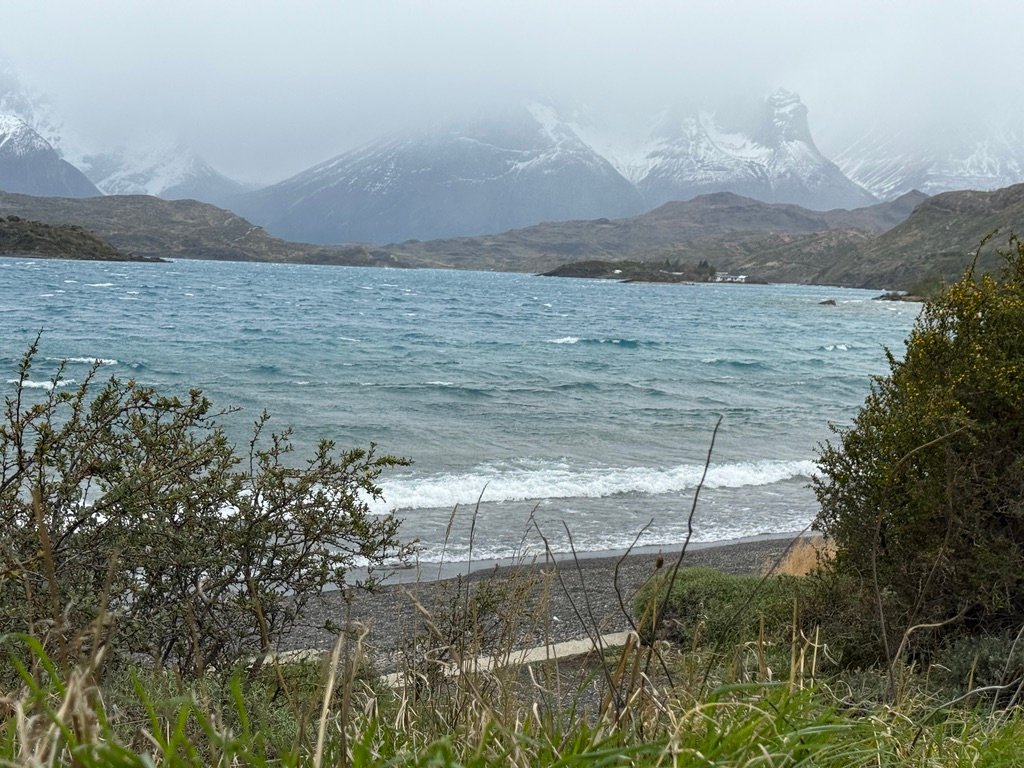
What is the Allowed Weight Limit for the Patagonia Trip?
The allowed weight limit for the Patagonia trip is 7 kg to 10 kg for day hike loads and 12 kg to 15 kg for full multi-day circuit packs. Park rangers and tour operators enforce the mentioned limits because Patagonian trails include steep technical ascents exceeding 700 meters of vertical gain in a single segment, and overloaded packs increase injury risk significantly. The W Trek in Torres del Paine covers about 80 kilometers across 4 to 5 days, meaning every unnecessary kilogram compounds fatigue exponentially over consecutive trekking days. Refugio-based trekkers on the W Circuit carry a lighter daily load and leave the main bag at camp. O Circuit trekkers carry camping gear and manage the full 12 kg to 15 kg limit across daily distances from 18 to 22 kilometers. Distributing weight evenly (heavier items centered near the back panel, lighter gear at the top and front pockets) keeps the pack within the legal limit. It maintains proper posture on uneven Patagonian terrain. A Patagonia trip pack exceeding 15 kg puts excessive pressure on the lumbar spine and ankle joints, increasing the probability of trail evacuation before circuit completion.
What is the Patagonia Trip Backpack Size Limit?
The Patagonia trip backpack size limit is 50 to 65 liters for multi-day circuit trekking and 25 to 40 liters for day hike configurations. Torres del Paine National Park and Los Glaciares National Park do not enforce a rigid liter restriction at entry gates. Tour operators and refugio transfer services set limits on porter-carried duffel bags. Porter-carried duffel bags have a maximum weight of 8 kg. Porter-carried duffel bags have a size limit of 65 liters. Operators follow strict limits to meet equipment handling standards. A 55-liter pack accommodates a sleeping bag, base layers, rain gear, food for 4 to 5 days, and a 2-liter water bladder without exceeding the structural load rating of standard trekking backpacks. Packs exceeding 70 liters force trekkers to overpack, pushing total weight past the 15 kg ceiling on the first day of the circuit.
The Patagonia trip backpack size limit directly affects packing by setting a hard boundary on the volume of gear carried. A 55-liter pack forces a strict gear audit before departure, eliminating duplicate items and non-vital comfort gear that add weight without improving safety or trail performance. Trekkers restricted to 40 liters on a day configuration learn to consolidate layers into dual-purpose items (a down jacket that compresses to fist size, replacing a bulky fleece and a vest carried separately). Packing to a volume limit protects joint health across multi-day segments and ensures the bag fits overhead compartments on regional flights to Punta Arenas or El Calafate.
The Patagonia trip backpack size limit directly affects packing by setting a hard boundary on the volume of gear carried. A 55-liter pack forces a strict gear audit before departure, eliminating duplicate items and non-vital comfort gear that add weight without improving safety or trail performance. Trekkers restricted to 40 liters on a day configuration learn to consolidate layers into dual-purpose items (a down jacket that compresses to fist size, replacing a bulky fleece and a vest carried separately). Packing to a volume limit protects joint health across multi-day segments and ensures the bag fits overhead compartments on regional flights to Punta Arenas or El Calafate.
What to Include in a Female Packing List for the Patagonia Trip?
The things to include in a female packing list for the Patagonia trip are listed below.
- Moisture-wicking base layers: Merino wool long-sleeve tops and thermal leggings regulate temperature from 0°C to 18°C without retaining sweat against the skin. A midweight merino set weighing under 400 grams covers the trail use and cold refugio nights.
- Sports bras (moisture-wicking): Synthetic or merino sports bras dry within 2 to 4 hours on the trail, compared to 24 hours for cotton alternatives. Pack 2 to 3 units and rotate daily to prevent chafing on high-mileage trekking days.
- Compact hygiene kit: A travel-size kit containing biodegradable soap, a 30mL dry shampoo, and a foldable menstrual cup reduces hygiene pack weight to under 300 grams. Dry shampoo extends hair freshness across 3 to 4 days during gaps in wash opportunities at refugios.
- Menstrual cup or period underwear: A menstrual cup eliminates waste disposal challenges across 4-day backcountry segments with no trash facilities. Period-absorbent underwear serves as a backup layer on rest days at refugios with laundry access.
- Supportive hiking boots (women-specific fit): Women-specific hiking boots have a narrower heel cup and wider toe box calibrated to female foot anatomy, preventing the ankle slippage common in unisex models on lateral descents. A mid-cut Gore-Tex boot broken in over 40 hours before the circuit prevents blisters on Patagonia's wet, rocky terrain.
- Merino hiking socks: Women-specific merino socks with a lower ankle profile and cushioned arch reduce pressure points under the ball of the foot on descents exceeding 500 meters. Pack 3 to 5 pairs and rotate daily to air out moisture across trekking days.
- Sun protection items: A wide-brim hat with a chin strap, SPF 50+ sunscreen, and UV400 polarized sunglasses protect the face, neck, and eyes during 6 to 8 hours of open-sky trekking on glacier and lake sections. Female skin exposed to Patagonia's thinned ozone layer without SPF 50+ burns within 90 minutes at peak UV hours.
Do Female Hikers need a Special Backpack for the Patagonia Trip?
No, female hikers do not need a special backpack for the Patagonia trip. The female hikers do not need a special backpack, but a women-specific fit pack delivers measurably better comfort across multi-day circuits. Women-specific packs feature a shorter torso length, pre-curved shoulder straps, and a contoured hip belt that sits on the iliac crest without creating pressure points on the hips. A standard unisex 55-liter pack fitted to a shorter torso slides upward on steep ascents, shifting pack weight from the hips to the shoulders and accelerating upper-body fatigue over a 20-kilometer trekking day. Female trekkers with a torso length under 45 centimeters benefit most from a women-specific fit, as unisex packs in that torso range commonly place the hip belt above or below the optimal load transfer point. A properly fitted pack (regardless of gender designation) transfers 70% to 80% of total load weight to the hips, protecting the spine across consecutive high-mileage days on the full Patagonia circuit.
What Items are Provided by Patagonia Trip Tour Operators?
The items that Patagonia trip tour operators provide are listed below.
- Trekking poles: Most full-service tour operators include a pair of collapsible trekking poles in the circuit package. Confirm pole availability before departure to avoid carrying a personal pair on the international flight.
- Sleeping bag and liner: Guided circuit packages covering refugio-to-refugio accommodation provide sleeping bags rated to -5°C and a fleece liner. Verify the bag's temperature rating with the operator, as shoulder-season trips (October to November) require a lower limit than summer tours.
- Meals at refugios: Full-service W Trek operators include breakfast and dinner at each refugio stop. Lunch and trail snacks stay the trekker’s responsibility from morning departure to evening arrival.
- Park entrance fees: Many tour packages bundle the Torres del Paine or Los Glaciares entrance fee into the overall trip cost. Request a fee itemization from the operator before payment to confirm inclusion.
- Emergency communication devices: Group guide-led circuits carry a satellite communication device (SPOT or Garmin InReach) for emergency contact. Solo trekkers on independent permits must supply their own satellite communicator.
- First-aid kit (group level): Lead guides carry a comprehensive group first-aid kit covering wound care, blister treatment, and emergency medication. Personal medical needs (prescription drugs, allergy medication) remain each trekker's individual responsibility.
What Items are Not Allowed on the Patagonia Trip?
The items that are not allowed on the Patagonia trip are listed below.
- Drones (without permit): Drones are prohibited inside Torres del Paine and Los Glaciares without a government-issued permit because the noise and presence disturb nesting condors, guanacos, and pumas protected under Chilean and Argentine conservation law.
- Single-use plastics: Plastic bags, disposable bottles, and single-use packaging are banned inside Chilean national parks because plastic waste on remote trails cannot be managed by park facilities, accumulating in waterways and harming native wildlife.
- Non-biodegradable soaps: Conventional soap containing synthetic surfactants is prohibited near waterways because Patagonian glacial streams feed drinking water sources for downstream communities, and chemical contamination is irreversible in high-altitude water systems.
- Open-flame camping stoves (in fire-ban zones): Torres del Paine bans wood fires and open-flame camping after a 2011 wildfire destroyed over 17,000 hectares of protected forest, so backcountry campsites allow canister gas stoves as the legal cooking method.
- Picking plants or removing rocks: Collecting flora, fauna, rocks, or fossils inside national park boundaries is illegal under Chilean Law 18,362 and Argentine park legislation. Violation results in fines and permanent trail access revocation.
- Feeding wildlife: Offering food to guanacos, foxes, or condors is prohibited because habituation to human food sources drives wildlife away from natural feeding grounds, disrupting the predator-prey balance in protected ecosystems.
- Alcohol in excess quantities: Carrying large quantities of alcohol into backcountry campsites violates park safety codes because intoxication at elevation and in severe weather significantly increases the probability of trail accidents requiring emergency rescue.
To pack your backpack for a Patagonia trip, follow the eight steps listed below.
- Sort gear into weight categories. Divide all packed items into three groups: heavy (sleeping bag, food, water), medium (clothing layers, first-aid kit), and light (documents, snacks, electronics). Grouping by weight before loading prevents random stacking that shifts pack balance on steep Patagonian ascents.
- Load the sleeping bag at the base. Place the sleeping bag in its compression sack at the very bottom of the pack's main compartment. A sleeping bag stored at the base lowers the center of gravity and keeps the bag dry away from the pack's top opening during rain.
- Pack heavy items against the back panel. Place food bags, a full water bladder, and cooking gear directly against the back panel above the sleeping bag. Heavy items centered high and close to the spine transfer load weight directly to the hips, reducing shoulder fatigue over 20-kilometer trekking days.
- Layer clothing around the heavy core. Wrap an insulating jacket, fleece, and spare base layers around the food and water core to fill the space and cushion hard items. Rolled clothing prevents internal shifting on uneven terrain and eliminates dead air pockets that waste pack volume.
- Store the rain jacket and cover at the top. Place the rain jacket and pack rain cover at the very top of the main compartment for immediate access without unpacking the full bag. Patagonian weather shifts from clear to heavy rain in under 10 minutes, making one-second rain gear access a functional necessity.
- Organize small vital things in hip belt pockets. Store sunscreen, lip balm, a snack, and hand sanitizer in the hip belt pockets for access without removing the pack. Hip belt pockets eliminate 15 to 20 full pack stops per trekking day, saving major time on long-distance circuit stages.
- Secure documents and electronics in a top-lid pocket. Place the passport, permits, power bank, and phone in a waterproof document sleeve inside the top-lid pocket. Top-lid storage keeps critical items accessible at park entry checkpoints without exposing the full pack contents to wind or rain.
- Attach trekking poles and fit the rain cover externally. Clip trekking poles to the external lash points on the pack's sides and stretch the fitted rain cover over the entire bag before leaving camp each morning. A properly fitted rain cover on a well-loaded backpack packing setup protects all internal gear through sustained Patagonian downpours lasting 4 to 12 hours.
The items required on a packing list for the Patagonia trip to Machu Picchu trek cover two climatically distinct environments (Patagonia's wind-exposed Andean circuits and the humid, high-altitude cloud forest approach to Machu Picchu). Temperatures shift from -5°C at Patagonian backcountry campsites to 28°C on the lower Inca Trail sections near Aguas Calientes, requiring gear that performs across a 33°C thermal range. The Inca Trail enforces a strict 7-kilogram daypack limit under Peruvian permit regulations, meaning every item must justify its weight against the environment. Waterproof, convertible, and quick-dry gear dominate the correct packing strategy, eliminating single-use items limited to one climate zone. The Patagonia trip to Machu Picchu Trek demands dual-purpose gear, layered clothing, and mandatory documentation carried across two countries and multiple protected park jurisdictions.
The items that are required on a packing list for the Patagonia Trip to Machu Picchu are listed below.
The items that are required on a packing list for the Patagonia Trip to Machu Picchu are listed below.
- Layered clothing system: A merino base layer, a 600-fill-power down jacket, and a 10,000mm-rated hardshell cover the full temperature range from Patagonia's wind-chill passes to the Inca Trail's 28°C cloud forest sections. Each layer must compress within the Inca Trail's 7-kilogram daypack limit without sacrificing thermal protection at Warmiwañusqa Pass at 4,215 meters.
- Waterproof hiking boots: Mid-cut Gore-Tex boots with Vibram outsoles handle Patagonia's flooded trail sections and the Inca Trail's wet stone staircase descents. Boots require a minimum 40-hour break-in period before the combined itinerary to prevent blisters on either circuit.
- Trekking poles: Collapsible poles reduce knee joint load by up to 25% on Patagonia's 700-meter scree descents and improve balance on the Inca Trail's rain-slicked stone steps near Dead Woman's Pass. Rubber tip covers protect ancient Inca Trail stone surfaces at regulated sections.
- Sleeping bag rated to -10°C: A down sleeping bag rated to -10°C covers Patagonia's overnight lows of -7°C and the Inca Trail's high-camp nights near 3,600 meters. A silk liner adds 3°C to 8°C of warmth and doubles as a standalone sheet at lower-elevation Inca Trail campsites.
- Water filter or purification tablets: A Sawyer Squeeze filter and 20 backup tablets treat glacial stream water in Patagonia and Inca Trail crossings, carrying Giardia and bacterial contamination. Treated natural sources supplement the 2-liter carry-on long trail segments among safe water points.
- SPF 50+ sunscreen and UV400 sunglasses: SPF 50+ sunscreen applied every 2 hours protects against Patagonia's thinned ozone layer and the UV index of 14 to 16 at Warmiwañusqa Pass. Polarized UV400 sunglasses eliminate glare from Patagonian glacier surfaces and open Andean ridgelines.
- Passport and trek permits: An original passport with at least 6 months of remaining validity clears Chilean, Argentine, and Peruvian border crossings. Printed permits for Torres del Paine and the Inca Trail must stay on the person at all times, as the two parks conduct spot checks at internal trail junctions.
- Travel insurance documentation: Torres del Paine rangers require a printed policy card that confirms medical evacuation and high-altitude trekking coverage. Evacuation costs without coverage reach [$10,000 to $50,000], a risk eliminated by an [$80 to $200] adventure trekking policy.
- High-calorie trail snacks: 2,500 to 3,500 calories of nuts, protein bars, and dried fruit per day sustains output on days burning 3,000 to 5,000 calories across the circuits. Pre-portioned daily bags keep the Inca Trail's 7-kilogram daypack within its weight limit on shorter approach segments.
- Power bank (20,000mAh): A 20,000mAh bank charges a smartphone 4 to 5 times, covering 3 to 4 consecutive days without power on Patagonia's O Circuit and the Inca Trail's 4-day camping route. Verify watt-hour specs against airline carry-on limits before the international Patagonia trip to Machu Picchu Trek departure.
Patagonia Trip Packing List FAQ
The mandatory items that you must pack for the Patagonia trip are listed below.
- Layered clothing system: A moisture-wicking base layer, insulating mid-layer, and waterproof outer shell are non-negotiable across all Patagonian trekking routes. Removing any single layer from the system exposes the body to hypothermia risk on wind-exposed passes above 1,000 meters.
- Waterproof hiking boots: Mid-cut or high-cut Gore-Tex hiking boots with Vibram outsoles are mandatory for navigating wet, rocky, and muddy Patagonian trail surfaces. Boots must be fully broken in before departure to prevent blisters on the first day of a multi-day circuit.
- Rain jacket and pants: A hardshell rain jacket rated at 10,000mm or above and packable rain pants are mandatory items on every Patagonia packing list. Patagonian precipitation arrives without a forecast warning and lasts 4 to 12 hours, saturating any non-waterproof outer layer.
- Trekking poles: Collapsible trekking poles are a mandatory safety item on steep Patagonian descents dropping 700 meters over loose scree. Poles reduce knee joint load by up to 25% and improve stability on river crossing sections of the circuit.
- Headlamp with spare batteries: A 200-lumen headlamp is mandatory for pre-dawn departures, tent setup in the dark, and navigation through unlit refugio corridors. Spare batteries or a USB charging cable prevent complete light failure on multi-day backcountry segments.
- Water treatment device: A compact filter or purification tablets are mandatory because glacial streams, while visually clear, carry Giardia and other waterborne pathogens at concentrations that cause severe gastrointestinal illness within 24 hours of unfiltered ingestion.
- Sun protection set: SPF 50+ sunscreen, UV400 polarized sunglasses, and a wide-brim hat with a chin strap are mandatory across all open-sky Patagonian trekking segments. UV radiation above 3,000 meters in southern Patagonia burns exposed skin in under 60 minutes without SPF protection.
The required documents to carry during the Patagonia trip are listed below.
- Passport: An original passport with at least 6 months of remaining validity satisfies entry rules at every Chilean and Argentine border crossing and national park entry gate. A color photocopy stored separately in the pack provides backup identification in case of loss or theft.
- Trek permit or booking confirmation: A printed or digital booking confirmation from CONAF in Chile or Argentina’s national park authority grants entry at circuit trailheads. Rangers at Torres del Paine conduct spot permit checks at internal trail junctions throughout the circuit.
- Travel insurance details: Park rangers require proof of travel insurance that covers emergency medical evacuation before they issue solo trekking permits at Torres del Paine National Park. The document must list the policy number, coverage limits, and 24-hour emergency contact number.
- Emergency contact card: Tour operators require a written emergency contact card that lists the trekker’s name, nationality, medical conditions, and next-of-kin contact, and park rangers recommend the same document at Patagonian entry points.
Yes, while hiking for the Patagonia trip, a passport is required. Border crossings across Chile and Argentina occur on the W Trek, the O Circuit, and the Fitz Roy circuit near El Chaltén, and immigration officials require an original government-issued passport at every crossing point. Park rangers at Torres del Paine also verify passport details at the park entry gate and cross-reference them against the CONAF booking system. A passport with fewer than 6 months of remaining validity risks denial of entry at the Chilean or Argentine border before the trek even begins. Carrying a color photocopy in a separate waterproof sleeve provides a backup identification document if the original is lost or damaged on the trail.
Yes, you need to carry your original passport. A copy alone is not sufficient for the Patagonia trip. Chilean and Argentine immigration law requires travelers to present the original physical passport at border crossings from Chile to Argentina. Immigration officers reject photocopies as primary identification during entry checks. Park rangers at Torres del Paine match passport numbers against the CONAF reservation system at the entry gate, a process that requires the original document for full verification. A color photocopy serves as a secondary backup and speeds up emergency document replacement at the nearest consulate in Punta Arenas or El Calafate. Storing the original in a waterproof document sleeve inside the top-lid pocket prevents moisture damage during sustained Patagonian rain events.
Yes, permits or tickets are required to be carried during the trek. CONAF rangers conduct random spot checks at internal trail junctions throughout the Torres del Paine circuit, and trekkers without a physical or digital permit face removal from the trail. The Inca Trail section of a combined Patagonia and Machu Picchu itinerary enforces a strict permit system through Peru's Ministry of Culture, where each permit is tied to the trekker's passport number and is non-transferable. A printed copy of the booking confirmation and a screenshot of the digital permit stored offline on a phone cover the ranger check scenarios on trails with no cellular coverage. Losing the permit document mid-circuit requires contacting the park administration at the Lago Pehoé ranger station to verify the reservation against the CONAF database.
The type of clothing you should pack for the Patagonia trip is a complete three-layer system built from moisture-wicking, quick-dry, and windproof materials in synthetic or merino wool fabrics. Patagonian weather cycles through warm valley sunshine, horizontal rain, and freezing ridgeline wind within a single afternoon, requiring a system that adds or removes insulation in under 60 seconds. The base layer pulls sweat from the skin, the insulating mid-layer traps body heat at rest stops, and the hardshell outer shell blocks wind and rain on exposed passes above 1,000 meters. Exclude cotton clothing entirely because it retains moisture against the skin and cools core body temperature fast enough to trigger hypothermia symptoms within 2 to 3 hours of cold-wind exposure. Merino wool and synthetic fabrics dry within 1 to 4 hours during a trekking day, allowing wet morning layers to recover thermal function by early afternoon when conditions stabilize.
The number of clothing sets to bring for the Patagonia trip is 2 to 3 trail sets for a 7 to 10 day circuit, with no more than one reserved clean set carried at any time. Packing beyond 3 sets pushes total pack weight past the 12 kg to 15 kg limit, displacing space for mandatory safety gear. A rotation of 2 moisture-wicking shirts, 2 pairs of hiking pants, 3 to 5 merino socks, and 3 to 5 merino underwear pairs covers the full circuit with daily rotation and overnight air-drying. Merino wool worn on 2 consecutive days retains acceptable hygiene because natural lanolin content inhibits bacterial odor growth for 48 to 72 hours of active use. One clean set reserved exclusively for sleeping keeps the sleeping bag lining free of trail grime and preserves the bag's thermal insulation across the full multi-night circuit.
The layers essential for the Patagonia trip weather conditions are a midweight merino base layer, a 600-fill-power insulating jacket, and a 10,000mm-rated hardshell covering the upper and lower body. Patagonian weather cycles through 4 distinct climate phases in a single trekking day (warm valleys at 15°C to 18°C, cold ridgelines at 2°C to 6°C, freezing wind-chill passes at -5°C, and warm refugio interiors at 12°C to 16°C). The base layer manages perspiration on 1,000-meter ascents where internal body heat rises sharply above ambient temperature. The insulating mid-layer deploys at pass transitions where trekking stops and heat loss accelerates immediately in crosswinds exceeding 60 km/h. Rain pants as a lower-body shell complete the system, blocking moisture on wet-trail descents lasting 2 to 4 hours in sustained precipitation, making the full Patagonia trip weather range manageable without carrying redundant gear.
Yes, you need rain gear for the Patagonia trip. Western zones of Torres del Paine receive up to 7,000mm of annual rainfall, and precipitation events arrive without consistent forecast warning across all trekking seasons from October to April. A hardshell rain jacket rated at 10,000mm with taped seams provides the minimum protection for sustained downpours lasting 4 to 12 continuous hours. Rain pants are equally non-negotiable. The wet hiking pants in 50 km/h crosswinds conduct heat from the lower body at a rate sufficient to cause hypothermia symptoms within 2 hours. Even the driest months (December to February) record precipitation on 8 to 12 days per month across western Torres del Paine, making rain gear a daily-carry item regardless of forecast conditions.
Yes, hiking boots are mandatory for the Patagonia trip. Trail surfaces include loose scree fields, flooded boardwalk sections, muddy forest floors, and river crossings that saturate low-cut shoes within the first hour of trekking. Mid-cut to high-cut boots with Gore-Tex waterproofing and Vibram outsoles maintain ankle stability on lateral slopes and protect the foot from cold water infiltration during 3 to 4 hour stream-crossing segments. Low-cut shoes lack the ankle cuff height to prevent gravel and mud entry on unmaintained backcountry trail sections. Break in hiking boots for at least 40 hours before departure. New boots on Patagonian terrain create pressure blisters that stop trekking by day 2.
Yes, you can wear trail runners instead of hiking boots. Experienced trekkers with high ankle stability wear trail runners on the W Trek, but the risk profile is measurably higher than that of waterproof hiking boots. Trail runners dry faster after stream crossings, which is an advantage on the drier eastern circuit sections near Mirador Las Torres. The absence of waterproofing becomes a liability on the Glacier Grey approach and Valle del Francés circuit, where sustained rain keeps feet wet for 3 to 5 consecutive hours. Trail runners with aggressive lugged outsoles (Hoka Speedgoat, Salomon Speedcross) provide adequate grip on rocky terrain but offer no ankle support on the loose scree descent from Paso John Gardner on the full O Circuit. Trekkers choosing trail runners accept faster drying and lighter load in exchange for reduced waterproofing and ankle protection on technical sections.
The best footwear for hiking the Patagonia trip is a mid-cut to high-cut waterproof hiking boot with a Gore-Tex membrane, a reinforced toe cap, and a Vibram lugged rubber outsole rated for wet rocky terrain. Patagonian trails cross glacial moraines, flooded boardwalk sections, muddy forest floors, and loose scree fields that demand a sole with at least 4mm lug depth to maintain traction on wet rock faces. A boot with Gore-Tex Extended Comfort Footwear lining keeps feet dry for 3 to 5 consecutive hours of rain exposure, covering the longest unshielded ridge-walk segments on the circuit. The heel counter must be rigid enough to prevent ankle inversion on the loose scree descent from Paso John Gardner, where a single ankle roll is hours from medical care in a remote area. Breaking in the chosen boot across at least 40 hours of varied trail use before departure eliminates pressure blisters, the primary cause of early trekking withdrawal on the Patagonian circuit.
Yes, you need to break in hiking boots before the Patagonia trip. New boots have stiff heel counters, unformed midsoles, and unworn outsoles that create friction pressure points within the first 5 kilometers of trail use. The W Trek begins on demanding terrain immediately, day 1 covers 11 kilometers to Refugio Las Torres with 850 meters of elevation gain on rocky switchbacks. Boots worn fewer than 10 hours before the circuit develop hot spots that progress to full blisters by day 2, at which point the nearest medical assistance requires a multi-hour trail exit and vehicle evacuation. A 40-hour break-in period across varied terrain shapes the boot to match the foot’s exact pressure points before Patagonia trekking exposes it to wet conditions and technical trails.
Yes, trekking poles are fully allowed on the Patagonia trip. Park rangers recommend trekking poles for the full O Circuit. Torres del Paine National Park and Los Glaciares impose no restrictions on trekking pole use across any trail segment. Poles reduce knee joint load by up to 25% on steep descents and improve balance on river-crossing sections where water depth varies with daily glacial melt rates. Collapsible poles pack into or alongside the main bag on shuttle buses and catamaran transfers among circuit legs, complying with all vehicle and vessel baggage policies. Carbide tips outperform rubber tips on rocky Patagonian terrain because rubber wears through in 2 to 3 days of sustained contact with abrasive scree.
No, rubber tips are not required on trekking poles for the Patagonia trip. Acarbide tips perform significantly better across most Patagonian trail surfaces. Torres del Paine and Los Glaciares do not enforce rubber tip requirements on any trail segment, unlike other boardwalk-heavy parks that mandate surface protection. Carbide tips grip wet rock, frozen ground, and compacted scree at a penetration force rubber tips cannot replicate on Patagonia's commonly wet and abrasive terrain. Rubber tips are practical for refugio interiors and wooden boardwalk transitions, so carrying a spare set of rubber covers to swap onto carbide tips at indoor stops delivers the best of the two options. A pair of rubber tip covers weighing under 20 grams fits in a hip belt pocket and deploys in under 5 seconds when transitioning from trail to refugio floor.
The recommended backpack size for the Patagonia trip is 50 liters to 65 liters for multi-day circuit camping and 25 liters to 40 liters for refugio-based trekking, where a main bag stays at camp among summit-approach days. A 55-liter pack fits a sleeping bag, 4 to 5 days of clothing, rain gear, food, and a 2-liter hydration bladder within the 12 kg to 15 kg weight ceiling without overloading the frame or hip belt. Packs under 45 liters force external strapping of bulky items like sleeping pads and wet rain gear, disrupting pack aerodynamics in Patagonia's 80 km/h crosswinds and increasing equipment loss risk on exposed ridgelines. A 65-liter maximum keeps the loaded pack within the dimension limits of regional aircraft serving Punta Arenas and El Calafate, avoiding checked baggage delays that affect connection timing to trailhead transfer buses. The pack must have a padded hip belt, load-lifter straps at the shoulder yoke, and a sternum strap to distribute the full loaded weight across the body's strongest load-bearing points.
You should bring a daypack and a full hiking backpack for the Patagonia trip. Trekkers on the Patagonia trip need a full circuit backpack (50L to 65L) and a daypack (25L to 40L) for the summit-approach days built into the W Trek and O Circuit itineraries. The full circuit pack carries overnight gear, food reserves, and camping equipment among refugio stops across each main trail segment. The daypack supports summit-approach days at Mirador Base Las Torres, Mirador del Francés, and Glacier Grey lookout, where the main bag stays at the refugio, and carries key items to travel to the viewpoint. A daypack with a hydration bladder sleeve and padded hip belt handles 6 to 8-hour summit pushes with a 5 kg to 7 kg load without the structural demands of the fully loaded circuit pack. Trekkers skipping the daypack carry the full circuit pack on summit days, adding an unnecessary 8 kg to 10 kg of overnight gear to trail sections requiring agility on boulder scrambles near the granite towers.
Yes, a duffel bag is required for the Patagonia trip porters. Tour operators and porter crews specify a soft-sided duffel, not a framed backpack, because porters carry multiple clients' bags simultaneously using tump lines and shoulder straps that require a flexible, compressible load format. The duffel must weigh no more than 8 kg, as Chilean labor regulations enforce porter weight limits to protect trekking industry workers from injury on technical terrain. A 65-liter duffel accommodates a sleeping bag, 5 days of clothing, and personal care items within the 8 kg ceiling when packed using compression sacks. Independent trekkers not using porter services carry all gear in a framed backpack and are not subject to duffel bag requirements at any point on the circuit.
The essential items for a Patagonia trip daypack are listed below.
- Rain jacket: A hardshell rain jacket stored at the top of the daypack deploys within seconds when Patagonian weather shifts mid-approach on summit segments. A jacket rated at 10,000mm covers the 4 to 6 hour round-trip window on the W Trek's main viewpoints without soaking through.
- Water (2 liters minimum): Two liters of treated water covers hydration needs for a 6 to 8-hour summit push on dry ridgeline sections where no water sources exist across the refugio and the viewpoint. A hydration bladder paired with a 1-liter backup bottle provides continuous drinking access without stopping to remove the pack.
- Trail snacks (day supply): 2,500 to 3,500 calories of pre-portioned nuts, protein bars, and dried fruit sustain energy on summit-push days, burning 3,000 to 5,000 calories. Pre-portioning into a single ziplock bag eliminates overpacking the daypack on shorter 4 to 5-hour approach segments.
- Compact first-aid kit: A kit containing blister treatment, ibuprofen, antiseptic wipes, and an elastic bandage covers the most common daypack-day injuries without adding more than 200 grams. Blister treatment is the highest-priority item on summit-approach days where boot friction peaks on boulder scramble sections.
- Headlamp: A headlamp stored in the daypack’s top pocket covers scenarios where a summit approach runs longer than planned, and hikers must navigate the return trail after sunset. Pre-dawn departures at 4:00 AM to 5:00 AM for sunrise viewpoints at Mirador Las Torres require active headlamp use for the first 60 to 90 minutes of the approach.
- Sunscreen and sunglasses: SPF 50+ sunscreen and UV400 polarized sunglasses are vital on open-sky summit approaches where UV intensity peaks above 1,000 meters. Reapplying every 2 hours on a full-day summit prevents burns that impair the next day's trekking performance on the circuit.
The sleeping gear that you should pack for the Patagonia trip is a technical sleeping bag rated from -10°C to -5°C, a high-R-value sleeping pad, a silk liner, plus a compact inflatable pillow. High-quality down insulation prevents heat loss during freezing nights. Sleeping pads provide a necessary thermal barrier from the body to the cold ground. Silk liners improve hygiene, adding a layer of warmth inside the bag. Inflatable pillows offer neck support, occupying minimal space. Remote campsites lack heating systems. Reliable insulation remains mandatory. Travelers select gear based on the season (October to April). Purchasing equipment having a comfort rating of [-15°C] offers protection against unexpected temperature drops. High-performance fabrics resist moisture absorption in humid environments. Quality equipment improves safety in wild regions. Proper gear ensures restorative rest before challenging 20km trekking days on a Patagonia trip.
Yes, you need to bring a sleeping bag for the Patagonia Trip. Mountain temperatures drop below freezing after sunset. Insulated bags prevent hypothermia during overnight stays. Travelers select bags matching the seasonal conditions. Compact designs fit into the bottom backpack compartment. Personal bags ensure hygiene comfort preferences. High-quality gear withstands the harsh southern climate. Camping remains the primary accommodation for remote trails. Bags provide the necessary thermal barrier against cold air. Hikers carry bags during independent treks. Reliable insulation stays vital in mountain zones. Proper gear ensures warmth throughout the Patagonia Trip.
Yes, sleeping bags are provided by the tour operators. Rental options include high-quality down bags rated for cold weather. Operators clean gear among different trekking groups. Liners remain mandatory for hygiene reasons. Travelers check booking details, equipment inclusions. Hiring gear reduces the weight of international luggage. Bags stay available upon arrival at campsites. Professional equipment ensures safe freezing nights. Other operators charge additional fees for rental services. Hikers confirm availability during the booking process. Providing gear helps travelers without personal mountain equipment. Operators ensure gear stays functional during the Patagonia Trip.
Yes, a sleeping bag liner is necessary for the Patagonia Trip. Liners protect the interior bag from sweat oils. Silk cotton materials provide an extra layer of warmth. Travelers use liners when renting bags from operators. Lightweight fabrics dry quickly after washing. Liners occupy minimal space inside the backpack. Adding a liner improves sleep comfort for sensitive skin. Using a liner extends the life of personal sleeping bags. Hygiene remains a priority in shared camping environments. Compact designs fit easily into small pouches. Liners serve as light covers on warm nights. Proper maintenance ensures gear remains fresh during the Patagonia Trip.
The toiletries you should pack for the Patagonia trip are listed below.
- Biodegradable soap: Environmentally friendly cleaners protect natural water sources. Small bottles suffice for the journey.
- Toothbrush paste: Oral hygiene remains mandatory during multi-day treks. Travel-sized tubes save space.
- Deodorant: Roll-on sticks manage body odors from physical exertion. Compact designs fit into hygiene kits.
- Moisturizer: Dry winds cause skin cracking on the face and hands. Lotions provide relief after sun exposure.
- Hand sanitizer: Alcohol gels clean hands without requiring water. Hygiene prevents illness before meals.
Yes, showers are available on the Patagonia Trip. Showers are available at specific campsites during the Patagonia Trip. Established refugios offer hot water facilities for limited hours. Remote camps lack shower facilities due to environmental constraints. Hikers pay small fees for access to hot water. Wet wipes serve as alternatives when water remains unavailable. Cold water showers exist in other national park areas. Demand often exceeds supply during peak seasons. Travelers plan hygiene routines around facility locations. Showers improve comfort after long trekking days. Water conservation remains a priority in protected zones. Availability depends on the chosen trekking route. Hikers discover facilities throughout the Patagonia Trip.
Yes, you need to bring toilet paper for the Patagonia Trip. Many trail bathrooms lack consistent paper supplies. Hikers carry rolls inside waterproof bags within the daypack. Used paper must stay inside the waste bags for disposal. Leaving paper on trails violates leave-no-trace principles. Portable tissue packs offer compact alternatives. Authorities mandate carrying out all personal waste. Being prepared ensures hygiene in remote locations. Proper disposal protects the local environment. Travelers include paper in the primary packing list. Supplies stay accessible throughout the journey. Hygiene remains the responsibility of each hiker during the Patagonia Trip.
Yes, hand sanitizer is necessary for the Patagonia Trip. Clean water remains scarce in specific trail sections. Sanitizers kill bacteria, preventing gastrointestinal infections. Travelers apply gel before eating meals or snacks. Small bottles fit into accessible pockets of daypacks. Sanitizer serves as a quick cleaning method after using the bathrooms. Maintaining health prevents trip interruptions. Portable units provide convenience during outdoor movement. Hygiene standards protect the entire trekking group. Hand sanitizer complements soap and water washing. Travelers prioritize health during remote expeditions. Staying healthy ensures the success of a Patagonia Trip.
The medical supplies that you should pack for the Patagonia trip are listed below.
- Blister pads: Hydrocolloid bandages protect skin from friction. Immediate application prevents wound worsening.
- Antiseptic wipes: Sterile cloths clean minor cuts and prevent infection. Wipes fit into compact first aid kits.
- Pain relief: Ibuprofen manages muscle soreness and headaches. Tablets assist recovery after steep climbs.
- Bandages: Adhesive strips cover small injuries and trail movement. Diverse sizes accommodate different wounds.
- Tweezers: Metal tools remove splinters, ticks, and skin. Precise tips ensure effective extraction.
No, you don’t need altitude sickness medication for the Patagonia Trip. Trekking in the Torres del Paine remains below 1,200 meters. Human bodies adjust to low altitudes. Other northern Argentine sections reach higher elevations. Hikers check specific route profiles before departure. Descending remains the best cure for altitude symptoms. Staying hydrated helps manage light headaches. Physical fitness improves the body's response to climbing. Medication carries potential side effects requiring medical advice. A lot of travelers breathe comfortably throughout the journey. Risks remain low compared to the Andean highlands. Safety depends on steady ascents during the Patagonia Trip.
Yes, you should bring sunscreen and insect repellent on the Patagonia Trip. High UV levels cause rapid burns even on cloudy days. Protective lotions shield skin from long-term damage. Biting flies and mosquitoes inhabit forest areas near lakes. Repellents improve comfort during evening camps. Sunscreen and insect repellent are available in travel-sized containers. Regular application prevents painful skin irritations. Sunscreen protects the face and neck during long exposures. Repellents deter pests during the summer months. Protection remains a priority during outdoor activities. Travelers carries the two items in the daypack. Staying protected ensures comfort throughout the Patagonia Trip.
Yes, travel insurance is highly recommended for the Patagonia Trip. Remote environments increase the risk of accidents. Search and rescue operations incur high costs in southern regions. Policies provide coverage for medical evacuations and trip cancellations. Insurance protects against financial loss from lost luggage. Travelers confirm coverage for high-risk activities like trekking. Document details stay accessible in emergencies. Insurance offers peace of mind during expeditions. National parks lack immediate medical facilities. Professional guides require insurance details before departure. Coverage ensures access to quality healthcare. Protecting the investment remains a priority during a Patagonia Trip.
The food and snacks that you should pack for the Patagonia trip are listed below.
- Trail mix: Nuts and dried fruits provide sustained energy. High calorie counts support long days.
- Energy bars: Compact bars offer quick glucose boosts. Multiple flavors prevent palate fatigue.
- Chocolate: Sugar content provides immediate fuel for steep climbs. Small pieces serve as reward milestones.
- Jerky: Dried meats provide protein for muscle recovery. Lightweight packaging fits into small pockets.
- Electrolyte tablets: Mineral powders restore salts lost through sweat. Adding tablets improves the water taste.
Yes, drinking water is provided during the Patagonia Trip trek. Natural streams offer clean glacial water throughout the region. Hikers refill bottles directly from flowing sources. Purification tablets ensure safety from local bacteria. Guided tours provide boiled filtered water camps. Refugios sell bottled water, which travelers prefer. Water quality remains high compared to urban areas. Staying hydrated supports physical performance. Travelers carry enough capacity from one source to the next. Access to water stays consistent on mountain trails. Drinking from nature defines the experience. Water remains abundant throughout the Patagonia Trip.
Yes, you need a reusable water bottle or hydration bladder. National parks forbid single-use plastic bottles for environmental reasons. Reusable containers reduce waste in protected zones. Hydration bladders allow drinking without stopping movement. Bottles stay easy to refill from mountain streams. A two-liter capacity ensures sufficient fluid from one water source to the next. Durable materials withstand drops and rocky paths. Bladders distribute weight evenly inside backpacks. Insulated hoses prevent cold mornings. The two options provide reliable hydration during treks. Choice depends on personal preference and convenience. Reusable gear supports the sustainability of the Patagonia Trip.
Yes, water purification tablets and filters are necessary for safety. Glacial streams contain minerals and pathogens from wildlife. Tablets provide a lightweight method for cleaning water. Portable filters remove sediment and bacteria instantly. Treating water prevents stomach illnesses during the trek. Clear water does not guarantee safety from microscopic organisms. Small kits fit easily into daypack pockets. Using treatment methods ensures peace of mind. Reliable water access depends on local sources. Purification remains mandatory for remote trail sections. Travelers prioritize health through water safety. Proper treatment protects hikers throughout the Patagonia Trip.
The electronics you should bring on the Patagonia trip are listed below.
- Smartphones: Devices function as cameras and GPS navigators. Offline maps assist pathfinding in remote areas.
- Power banks: Portable batteries charge electronics without outlets. Large capacities ensure multiple recharges.
- Digital cameras: High-quality sensors capture landscape details. Spare memory cards store thousands of images.
- Universal adapters: Plug converters fit local electrical sockets. Standard outlets vary from Argentina to Chile.
- Headlamps: Hands-free lights illuminate campsites after dark. LED bulbs save battery life.
Yes, power banks are necessary for the Patagonia Trip. Remote campsites lack electrical charging points. Smartphones drain batteries quickly in cold weather, especially when using GPS. Power banks ensure devices remain functional in emergencies. Travelers select models (10,000mAh) for multiple charges. Cold temperatures reduce battery efficiency significantly. Keeping banks inside sleeping bags maintains warmth. Multiple ports allow charging different devices simultaneously. Lightweight designs minimize the load inside daypacks. Banks provide independence from refuge facilities. Reliable power supports safety navigation. Travelers carry power banks during the Patagonia Trip.
Yes, there is electricity charging along the Patagonia Trip. Established mountain huts feature limited power outlets. Demand for charging often exceeds available sockets. Remote tent sites offer zero electrical access. Electricity relies on generators and solar panels in specific locations. Charging hours remain restricted to evening periods. Travelers pay small fees to access power points. Outlets use standard Chilean Argentine configurations. Power banks remain a more reliable source of energy. Hikers prioritize charging necessary devices (phones). Electricity availability depends on the chosen route. Facilities remain limited throughout the Patagonia Trip.
Yes, cameras are allowed, but drones remain forbidden on the Patagonia trip. High-resolution photography captures the stunning mountain scenery. National park regulations strictly prohibit drones from protecting wildlife. Aerial devices disturb the tranquility of remote environments. Using drones results in heavy fines and equipment confiscation. Professional photographers obtain special permits for specific projects. Standard cameras provide excellent results without disturbing nature. Travelers respect local rules regarding electronic devices. Capturing memories requires ground-based equipment. National parks prioritize conservation over aerial filming. Privacy remains important in shared trail spaces. Respecting rules ensures a positive Patagonia Trip.
The season affects what you pack for the Patagonia trip through temperature variations and precipitation levels. Summer months (December to February) require lightweight breathable fabrics. High winds during the months of December to February demand windproof outer shells. Winter periods (June to August) require heavy thermal insulation. Waterproof gear remains mandatory throughout the year due to unpredictable storms. Seasonal changes dictate the type of sleeping bag rating needed. Hikers carry extra layers for shoulder seasons (October to November). Daylight hours vary significantly among seasons. Sun protection remains vital during long summer days. Snow gear is necessary for high-altitude winter treks. Packing lists adjust based on local climate forecasts. Understanding the Patagonia trip weather ensures travelers bring the correct gear.
The things that you should pack for the Patagonia trip during the dry season are listed below.
- Sun hat: Brimmed caps protect the face from intense sunlight. Lightweight fabrics allow heat escape.
- Dust masks: Buffs protect the nose and mouth from dry trail dust. High winds lift particles during summer.
- Lightweight trousers: Breathable fabrics prevent overheating during long walks. Zip-off designs offer temperature flexibility.
- Short-sleeve shirts: Synthetic shirts manage sweat on warm afternoons. Quick-dry materials keep hikers comfortable.
- Sunglasses: Polarized lenses filter bright glare from granite rocks. UV protection prevents eye strain.
The extra items that are needed for the rainy season are listed below.
- Gaiters: Waterproof leg coverings prevent mud from entering boots. Deep puddles require extra lower leg protection.
- Dry bags: Waterproof liners keep internal backpack contents dry. Electronic devices require total moisture shielding.
- Extra socks: Dry feet prevent blisters in cold, damp conditions. Multiple pairs allow rotation while drying.
- Heavy raincoats: Durable shells withstand prolonged downpours. High waterproof ratings ensure core dryness.
- Towel: Microfiber cloths dry skin after wet trekking days. Small sizes pack easily into bags.
Yes, packing changes for shoulder season hikes. Packing changes for shoulder season hikes include additional thermal layers. Temperatures shift sharply from sunny afternoons to freezing nights. Snow occurs commonly in high passes during the shoulder season. Hikers bring heavier sleeping bags to handle cold camps. Waterproof gear remains more vital due to frequent rain. Layering systems require more versatility to handle changing conditions. Fewer facilities stay open during the shoulder seasons. Travelers carry extra food supplies in remote areas. Daylight hours remain shorter than in the summer months. Preparation requires checking specific weather patterns. Adaptability ensures safety during a shoulder season Patagonia Trip.